
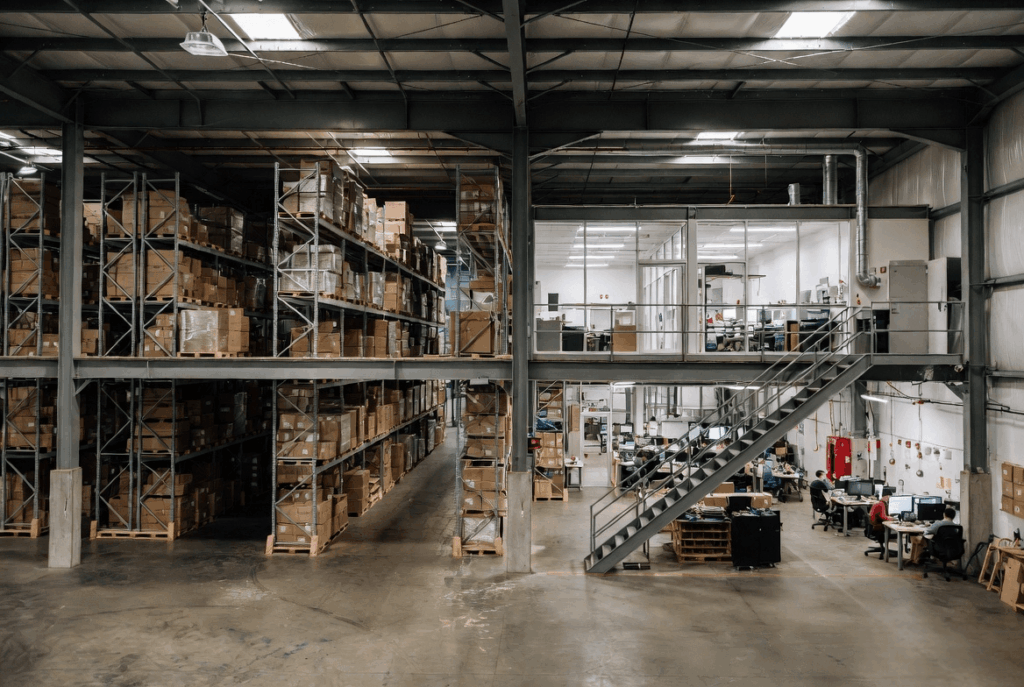
Same Square Footage. Different Mezzanine Investment.
When businesses begin planning a mezzanine floor, one of the first figures usually discussed is square footage. Understandably, the amount of additional floor space required often becomes the starting point for budgeting conversations.
However, mezzanine projects are rarely defined by dimensions alone.
Two mezzanine floors with identical measurements can differ considerably in specification, structural complexity, compliance requirements, and final investment value. While the floor area may remain the same on paper, the way the space is intended to function can completely reshape the project behind the scenes.
This is why successful mezzanine planning requires more than simply calculating available space. The operational role of the mezzanine has an equally important impact on design, engineering, and long-term performance.
Floor Area Is Only One Part of the Equation
Additional floor space is often the visible goal of a mezzanine installation. Warehouses, industrial facilities, and commercial buildings frequently turn to mezzanine floors when operations begin outgrowing existing layouts.
At first glance, it may appear that budgeting should be relatively straightforward:
larger mezzanine equals larger cost.
In reality, the intended purpose of the structure introduces several other variables that can significantly influence project scope.
A mezzanine used for lightweight storage may involve a very different specification compared to one intended for:
- Office accommodation
- Operational workspace
- Staff occupancy
- Heavy-duty storage
- Manufacturing activity
- Picking and packing operations
Although the platform dimensions may remain identical, the structural and compliance requirements supporting those functions can vary substantially.
Why Similar Projects Can Produce Different Budgets
One of the reasons mezzanine pricing sometimes feels inconsistent is because many specification differences are not immediately visible.
Two mezzanine floors may share:
- Similar dimensions
- Comparable layouts
- Matching warehouse environments
- Similar structural appearance
Yet internally, the projects may involve completely different:
- Structural calculations
- Safety systems
- Compliance requirements
- Loading capacities
- Operational expectations
The visible platform is only one layer of the overall system.
Much of the real complexity exists within the engineering and operational requirements supporting the structure.
Looking Beyond Floor Area
Mezzanine floors are not simply about creating additional square footage inside an existing building.
They are about developing space capable of supporting specific operational demands effectively, safely, and efficiently.
This is why two projects with the same dimensions can produce very different budgets. The deciding factor is rarely the footprint alone. It is the combination of structural performance, operational functionality, compliance requirements, and long-term business needs that shapes the final specification.
When businesses define these operational priorities early, mezzanine planning becomes more accurate, more efficient, and far better aligned with future growth requirements.
Happy to help evaluate whether your space is best suited for storage, office use, or a combination of both.


